 Cart
 Sign In / Register
























Oct 19, 2026
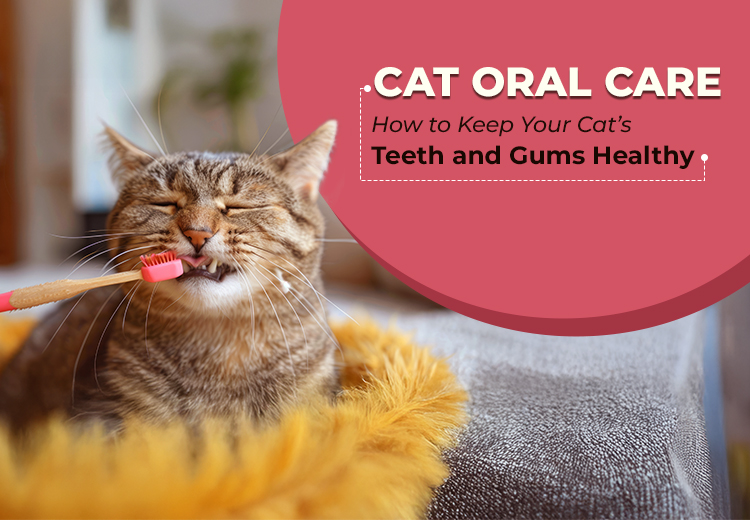
Ask cat parents about their cat and most of them can tell you their furball's favourite sleeping spot, their feeding schedule, and exactly how they like to be scratched. Far fewer would have looked closely inside their cat's mouth. That's not really anyone's fault; cats are notoriously private about their teeth, and dental problems tend to develop quietly, without the obvious signals. But oral health has a real, measurable effect on a cat's quality of life, and understanding what's actually going on in your cat’s mouth is worth the effort. In this article, we will cover the basics of cat oral care.
Read on to learn more.
Studies report that somewhere between 50% and 90% of cats over the age of four years struggle with some form of dental disease. By the age of six, an estimated 85% of cats show signs of periodontal disease specifically. Those numbers highlight an important point: dental disease is not an occasional problem affecting only a few unlucky cats; it is extremely common.
Part of why it goes unnoticed for so long comes down to how cats behave. A cat in dental pain may continue eating, grooming, and behaving mostly normally, simply because stopping is not really an option for a species that's spent its evolutionary history needing to appear as a predator. That instinct does not disappear just because a cat lives on a couch in Cape Town instead of hunting for its own meals.
The three most common dental diseases in cats are gingivitis, periodontitis, and tooth resorption, and the severity of each condition can vary significantly.
Gingivitis is a condition in which the gums around the teeth become inflamed. It begins with the plaque build-up, a film that harbours bacteria, on the teeth.
If gingivitis is not controlled, it can progress to periodontitis, a more advanced condition that eventually cannot be reversed. In this condition, the inflammation involves the cat's own immune system, where the tissue that attaches the tooth to the underlying gums and bones is weakened as a result of damaging substances produced by disease-causing bacteria.
Tooth resorption is the most common cause of tooth loss in cats. It is a painful process in which the tooth structure breaks down, beginning inside the tooth and often progressing to other parts of the tooth.
Because cats mask discomfort so well, the signs of a developing dental problem are often subtler than cat parents expect. Some common signs include:
None of these symptoms confirms a specific diagnosis on their own. They're simply signals that something may be wrong and deserves a veterinarian's attention.
Good oral health is maintained by daily oral hygiene. Helping prevent oral diseases in your pet requires proactive care from the start.
Daily brushing is the most effective form of home oral care. Realistically, brushing a cat's teeth takes patience and a gradual introduction, since most cats need time to tolerate having their mouth handled at all. It is advisable to first massage the lips, teeth, and gums of your pet. Starting slowly, using a cat-specific toothbrush and toothpaste, and building up tolerance over days or weeks tend to work better than expecting immediate cooperation.
If an adult cat will not allow routine tooth brushing, many cat parents go for oral rinse and dental care gel as alternatives.
Some dental diets and VOHC-approved dental chews may also help promote dental hygiene. These are not a substitute for brushing where brushing is possible, but they may provide additional support when brushing is difficult. Whatever combination of home dental care you settle on, it works best alongside professional dental check-ups.
A quick look at a cat's visible teeth tells you very little about what's happening below the gumline, which is exactly where periodontal disease and tooth resorption tend to start. Standard veterinary practice includes a thorough dental examination of the animal's teeth under anaesthesia and X-rays.
Don’t wait for obvious symptoms to schedule dental check-ups and think your cat is fine. Routine oral examinations, along with routine vet visits, are reliable ways to catch dental disease before it progresses, precisely because cats hide the early signs of dental disease so well. If you've noticed any of the signs mentioned earlier, that's a reasonable prompt to move a vet appointment up.
Cat oral care isn't a one-time task or a single decision between brushing and not brushing. It's a combination of consistent home habits and regular veterinary dental check-ups. Given how common dental disease is and how quietly it tends to develop, taking care of your cat’s oral health as a routine part of their overall health is one of the more meaningful things you can do for their long-term comfort.


Sep 22, 2026
Fleas and ticks aren’t just a warm-weather nuisance in South Africa. Our pets can encounter fleas and ticks year-round during their v...

Sep 10, 2026
Parasitic infections are one of the biggest challenges for pet parents. The harmful pests, such as fleas, ticks and worms, cause potentiall...


© 2026 BudgetPetSupplies.co.za (MSV Pet Care (Pty) Ltd.) - All Rights Reserved.
 About Us
 Contact Us

 Dogs